
From Vision to Reality: How the UAE’s New National Infrastructure Fund Opens Doors for Global Capital
- Oliver Kirkbright
- Nov 23, 2025
- 4 min read

The UAE Cabinet has approved the establishment of the National Investment Fund with an initial capitalisation of AED36.7 billion (approximately $10 billion), marking a decisive shift in how the Emirates positions itself for international capital. This isn't just another government initiative: it's a comprehensive strategy to reshape the UAE's investment landscape and create substantial opportunities for sophisticated international allocators.
Sheikh Mohammed bin Rashid announced the fund's creation during a Cabinet meeting at the Dubai Airshow, signalling the UAE's intent to leverage its position as a global aviation hub whilst expanding into high-value sectors. The timing isn't coincidental. As regional competitors intensify their capital attraction efforts, the UAE is establishing a framework that combines government backing with market-driven incentives.
Strategic Scale and National Ambitions
The National Investment Fund operates as the cornerstone of the UAE's National Investment Strategy 2031, with targets that reflect genuine ambition rather than aspirational planning. The country aims to increase annual foreign direct investment inflows from AED115 billion ($31.3 billion) to AED240 billion ($65.4 billion) by 2031: effectively doubling current levels within a decade.
More significantly, the UAE targets raising total accumulated foreign investment stock from AED800 billion to AED2.2 trillion ($600 billion) by 2031. These figures represent a fundamental expansion of the UAE's economic base, moving beyond traditional sectors toward knowledge-intensive industries that align with global capital trends.
The fund's structure allows for future review and expansion, indicating the government's willingness to scale resources based on market response and opportunities. This flexibility distinguishes the initiative from fixed-allocation programmes that often constrain adaptation to changing market conditions.

Investment Priorities and Sectoral Focus
The National Investment Fund targets sectors where the UAE can leverage existing advantages whilst building new capabilities. Technology and advanced manufacturing receive priority allocation, reflecting the country's push toward economic diversification and higher-value production.
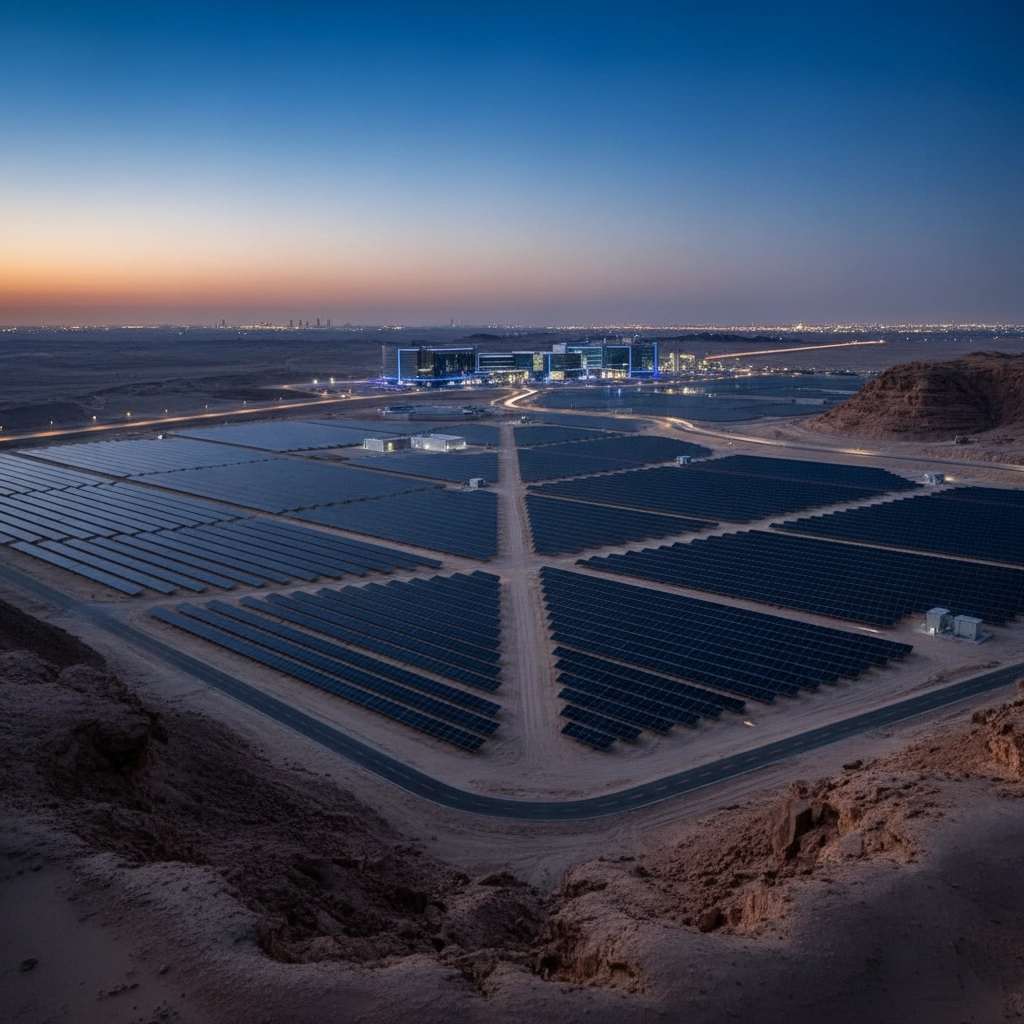
Renewable energy projects represent another strategic focus, positioning the UAE to capitalise on global energy transition trends whilst developing domestic capabilities. The country's solar initiatives and hydrogen development programmes provide a foundation for scaled renewable energy investment.
Logistics and supply chain infrastructure leverage the UAE's geographic position and existing transport networks. Dubai's status as a global logistics hub and Abu Dhabi's industrial capabilities create natural advantages for companies seeking regional distribution centres and manufacturing bases.
Financial services and information technology receive targeted support as the UAE develops its position as a regional financial centre. The combination of regulatory sophistication, digital infrastructure, and regional connectivity creates opportunities for financial technology companies and institutional service providers.
Operational Framework and Government Coordination
The fund operates through a dual-track approach that combines federal resources with emirate-level coordination. Rather than creating competing initiatives, the structure ensures unified support across different jurisdictions whilst maintaining local flexibility.
Federal-level direct financing targets strategic opportunities with national impact, whilst cooperation with individual emirate authorities ensures local support and regulatory alignment. This coordination reduces bureaucratic friction that often complicates investment processes in federal systems.
Companies demonstrating remarkable economic impact potential can access targeted development packages that provide financial incentive structures beyond standard investment promotion programmes. These packages are designed for enterprises that can contribute meaningfully to economic diversification and employment creation.
The fund co-finances major projects alongside emirate-level authorities, creating unified investment frameworks that reduce duplication and strengthen competitive positioning. This approach ensures that successful companies receive consistent support across different phases of development and expansion.
What International Investors Need to Understand
For international allocators, the National Investment Fund represents access to government-backed co-investment opportunities in a stable, business-friendly jurisdiction. The UAE's regulatory environment, political stability, and economic governance create risk-adjusted returns that compare favourably with other emerging market destinations.
The fund's focus on high-impact companies means international investors can identify local partners with strong government relationships and sector expertise. This access becomes particularly valuable for private equity and infrastructure funds seeking regional exposure with reduced execution risk.
Alternative investment managers will find the UAE's regulatory framework accommodates sophisticated investment structures whilst providing investor protection comparable to developed markets. The combination of DIFC and ADGM financial centres offers regulatory optionality that supports different fund strategies and investor bases.
The fund's sectoral priorities align with global capital trends toward ESG-compliant investments and technology-enabled business models. International investors can deploy capital in sectors experiencing secular growth whilst benefiting from government support and regional market access.
Regional Competitive Positioning
The UAE's approach differs materially from regional competitors through its emphasis on operational efficiency and regulatory predictability. Whilst Saudi Arabia pursues larger-scale initiatives through the Public Investment Fund, the UAE focuses on creating sustainable competitive advantages through institutional quality and business environment optimisation.
According to the World Investment Report 2024, the UAE ranked second globally as an investment hub, securing $30.688 billion in FDI inflow during 2023. This performance reflects consistent policy implementation and institutional development that creates confidence among international allocators.
The country's position as a global connector bridging different economies provides natural advantages for companies seeking regional headquarters or distribution centres. The combination of geographic location, transport infrastructure, and business environment creates network effects that benefit multiple stakeholders.
Dubai's status as a financial centre and Abu Dhabi's industrial capabilities complement each other, allowing the UAE to support different types of investment strategies within a unified regulatory framework. This versatility attracts diverse international capital sources seeking different risk-return profiles.
Implementation Timeline and Strategic Context
The 2031 timeline provides sufficient duration for meaningful project development whilst maintaining urgency around execution. International investors can structure medium-term investment strategies with clear visibility on government priorities and support mechanisms.
The fund's announcement at the Dubai Airshow demonstrates the UAE's confidence in its aviation sector whilst signalling expansion into complementary industries. This sectoral approach allows international investors to identify cross-sector opportunities that leverage existing UAE strengths.
Early-stage engagement with the fund's investment priorities positions international allocators to benefit from first-mover advantages in sectors receiving government support. The combination of capital deployment and relationship development creates sustainable competitive positioning for sophisticated investors.
The UAE's approach emphasises partnership rather than substitution for private capital, creating opportunities for co-investment and risk-sharing that enhance returns whilst reducing execution risk. For international investors familiar with Middle Eastern markets, this represents a material improvement in investment infrastructure and government sophistication.
Understanding the National Investment Fund's structure and priorities enables international investors to align capital deployment with UAE economic development objectives whilst accessing opportunities that benefit from government support and regional market dynamics.