
Inheriting Change: How the New GCC Generation is Fuelling Private Growth
- Feb 20
- 5 min read
Updated: Mar 9

There's a quiet shift happening across the Gulf's sovereign wealth funds and family offices. It's not just about portfolio rebalancing or tactical tilts. It's generational: and it's rewriting how capital gets deployed across Private Markets Middle East.
The allocators making decisions today aren't the same ones who built the model. Many cut their teeth in London, New York, or Singapore. They've seen tech booms, climate mandates, and the infrastructure build-outs that followed. Now they're back home: and they're looking at the GCC through a different lens entirely.
This isn't about abandoning oil revenues. It's about recognising that the future economy in the region will be powered by sectors that didn't exist a decade ago. And the capital is moving accordingly.
The Numbers Tell the Story
Non-oil activities now account for over 73% of GCC GDP. That's not a projection: that's where we are today. Real GDP growth for 2026 is projected at approximately 4.5%, and it's the non-oil sectors driving it.
Compare that to advanced economies growing at roughly 1.9% annually, and the opportunity set becomes clear. The three main GCC economies are expected to grow at around 4% per annum over the next four years: more than double the pace of developed markets.
For institutional investors and Alternative Investments GCC allocators, this represents a structural shift. The growth isn't coming from hydrocarbons. It's coming from digital infrastructure, renewables, advanced manufacturing, and the venture ecosystem that's emerged around them.
Private equity in the region, particularly Private Equity Saudi Arabia and Private Equity UAE, is recalibrating accordingly. The GCC private equity market is valued at USD 4.5 billion in 2025 and projected to reach USD 7.4 billion by 2032, growing at 6.5% annually.
But the real story isn't the quantum. It's where the money is going: and who's allocating it.
A New Generation at the Table

Walk into any event in the Middle East today and you'll notice something. The decision-makers are younger. More diverse. And they speak fluent VC, climate tech, and growth equity.
This generational shift is most visible in sovereign wealth funds and family offices. The executives overseeing multi-billion-dollar portfolios increasingly come from global asset management backgrounds. They've worked at Blackstone, KKR, and Carlyle. They've deployed capital into SaaS businesses, battery storage, and AI infrastructure.
Now they're applying that playbook locally. Allocators are building out dedicated teams for venture capital, launching direct co-investment platforms, and bringing in external managers who specialise in future economy sectors. The emphasis has moved from preservation to participation.
Family offices, in particular, are becoming more institutionalised. What were once conservatively managed portfolios are now sophisticated platforms with dedicated teams for Private Debt Saudi Arabia, Private Debt UAE, growth equity, and even fund-of-funds strategies targeting emerging managers.
The Sectors Capturing Capital
The capital isn't rotating into generic "alternatives." It's flowing into specific sectors that align with national transformation agendas: and where the GCC has legitimate comparative advantages.
Artificial Intelligence and Digital Infrastructure

AI is no longer a Silicon Valley story. The GCC is positioning itself as a global hub for artificial intelligence development, with significant government backing and private capital following.
Saudi Arabia and the UAE are investing heavily in data centres, cloud infrastructure, and AI-native businesses. Sovereign funds are taking stakes in global AI leaders while simultaneously backing regional players building Arabic language models and localised solutions.
For allocators, this means exposure to a sector where the region isn't playing catch-up: it's building from a position of strength. The infrastructure is being laid now, and the businesses being built on top of it represent genuine alpha opportunities.
Green Energy and Climate Infrastructure
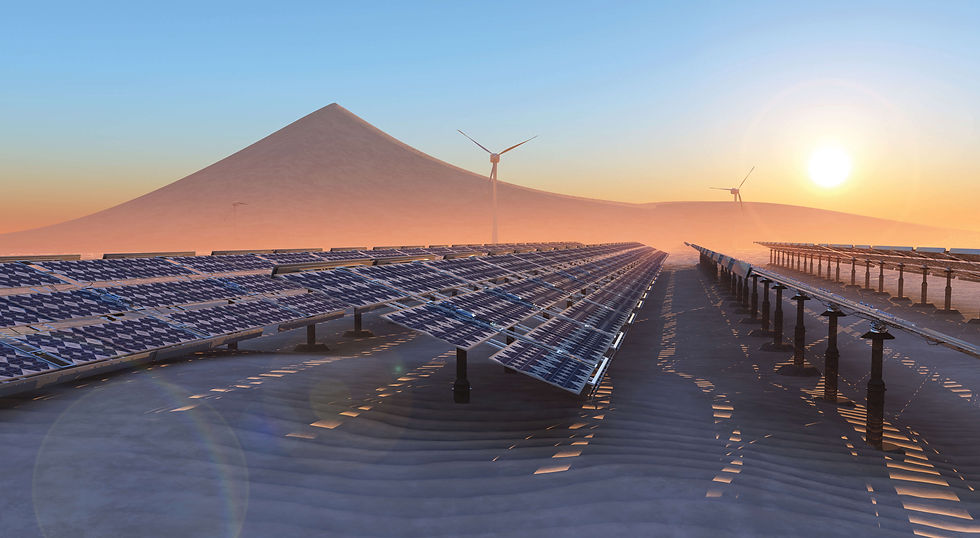
This is where the pivot is most visible. Saudi Arabia's Vision 2030 and the UAE's Net Zero by 2050 commitment are channelling enormous capital into solar, wind, and green hydrogen projects.
The Middle East is rapidly emerging as a global epicentre for new energy infrastructure investment. And unlike previous commodity cycles, this one is being led by private markets.
Private Credit investment strategies KSA are increasingly focused on financing utility-scale renewable projects. Infrastructure funds are backing grid modernisation. And venture capital is flowing into energy storage, carbon capture, and the enabling technology that makes decarbonisation possible at scale.
The opportunity set is significant: and it's moving quickly. Projects that were conceptual three years ago are now reaching financial close.
Advanced Manufacturing and Industrial Tech

Manufacturing is being rethought across the Gulf. The focus is on high-value production: aerospace components, pharmaceuticals, electric vehicle supply chains, and advanced materials.
Saudi Arabia is advancing transactions involving logistics hubs and industrial zones. The UAE is positioning itself as a manufacturing bridge between Europe and Asia. And both are using GCC Capital Raising mechanisms to attract private capital into joint ventures and PPPs.
For institutional investors, this represents a sector with inflation-linked returns, long-term contracted revenues, and direct alignment with sovereign objectives. It's infrastructure: but it's forward-looking infrastructure.
Healthcare and Fintech

Healthcare in the GCC is shifting from “beds and buildings” to outcomes and platforms. The next generation of allocators in Riyadh, Abu Dhabi, and Dubai is underwriting integrated provider models, specialised clinics, diagnostics roll-ups, and health tech that reduces claims leakage and improves utilisation. They treat healthcare as a data-rich, operational asset class: with governance, KPI discipline, and tech-enabled expansion plans that can compound across the region, not a defensive, domestically anchored allocation.
Fintech is being approached with the same generational lens: less “spray-and-pray apps,” more regulated rails and scalable infrastructure. Younger investment teams are leaning into payments, embedded finance, SME lending, and Islamic finance innovation where licensing, compliance, and distribution are the moat. They back management teams that can navigate the Saudi and UAE regulatory stack, partner with incumbents, and build durable unit economics: because in the GCC, trust is the product and regulation is the competitive advantage.
What This Means for Allocators
The generational pivot isn't theoretical. It's reshaping how capital gets allocated, how funds get structured, and what success looks like.
Allocators are asking different questions. It's not just about IRR: it's about strategic alignment, ESG credibility, and whether a fund manager understands the local operating environment.
This has implications for Setting up a fund in UAE and fundraising more broadly. Managers who can articulate a clear thesis around future economy sectors: and demonstrate local execution capability: are finding capital. Those running generic strategies are struggling.
GCC investor relations has also evolved. LPs expect regular dialogue, thematic insights, and co-investment opportunities. The old model of quarterly reporting and annual meetings doesn't cut it anymore.
And for those attending Institutional Investor Events across the region, the composition of the room has changed. You're now speaking to allocators who are as comfortable discussing AI compute infrastructure as they are natural resources.
The Middle East Investor Network has become a critical forum for this dialogue: connecting institutional LPs with managers who are building exposure to the future economy.
Capital Follows Conviction

The shift from oil-centric portfolios to future economy sectors isn't happening because of mandate drift. It's happening because a new generation of allocators is making different decisions: informed by global experience and local ambition.
The GCC is projected to see private credit markets reach USD 20 billion by 2030, fueled by diversification momentum. The infrastructure pipeline is deep. The venture ecosystem is maturing. And the capital is there.
What's required now is execution. Managers who understand the sectors, the regulatory environment, and the allocation dynamics will find receptive capital. Those who treat the region as an emerging market checkbox will struggle.
The future economy in the GCC isn't a theme. It's a structural shift: and the allocators driving it aren't waiting for consensus. They're building portfolios for a region that looks nothing like the one their predecessors managed.
That's not a pivot. That's a generational reset.
Join GCC LPs and GPs at ALTInvest by the Middle East Investor Network, taking place 7-8 April in Downtown Dubai.:


Comments